
SHARON's BOARD


One of the most famous dragon killers was in the English book "The Golden Legend," published in the 1480s. This story tells of a knight who came to the aid of a town hurt by a hungry dragon.
The town fed the dragon two sheep a day to prevent attacks on their children, and the king sadly agreed to give the dragon his daughter. As the princess awaited a fiery death by dragon, St. George found them both. He defeated the dragon and then St. George killed it in front of the king.
Not all dragons were mean, though. In Japan, O Goncho was a white dragon who signaled times of famine. In many cultures, mean dragons like O Goncho are shown with their heads pointing down, while dragons that are nice are shown with their heads pointing toward the sky.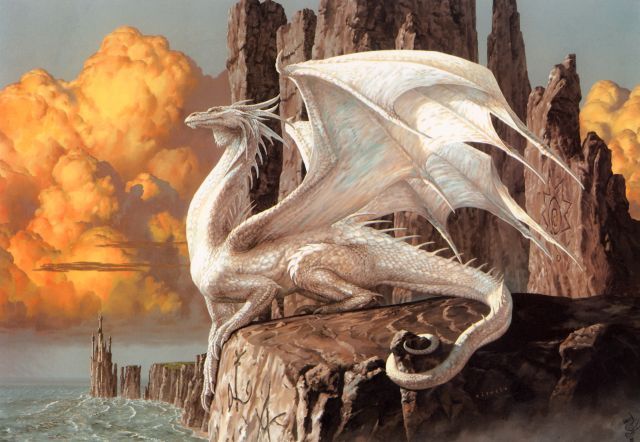
Western dragons mean destruction and death, while Eastern dragons mean fortune and great power, both good and bad. In Korea, for example, a dragon signifies the circle of life and is often portrayed with its body in a circle. The Chinese zodiac also includes a dragon. The dragon sign, along with the 11 other signs, repeats every 12 years.
